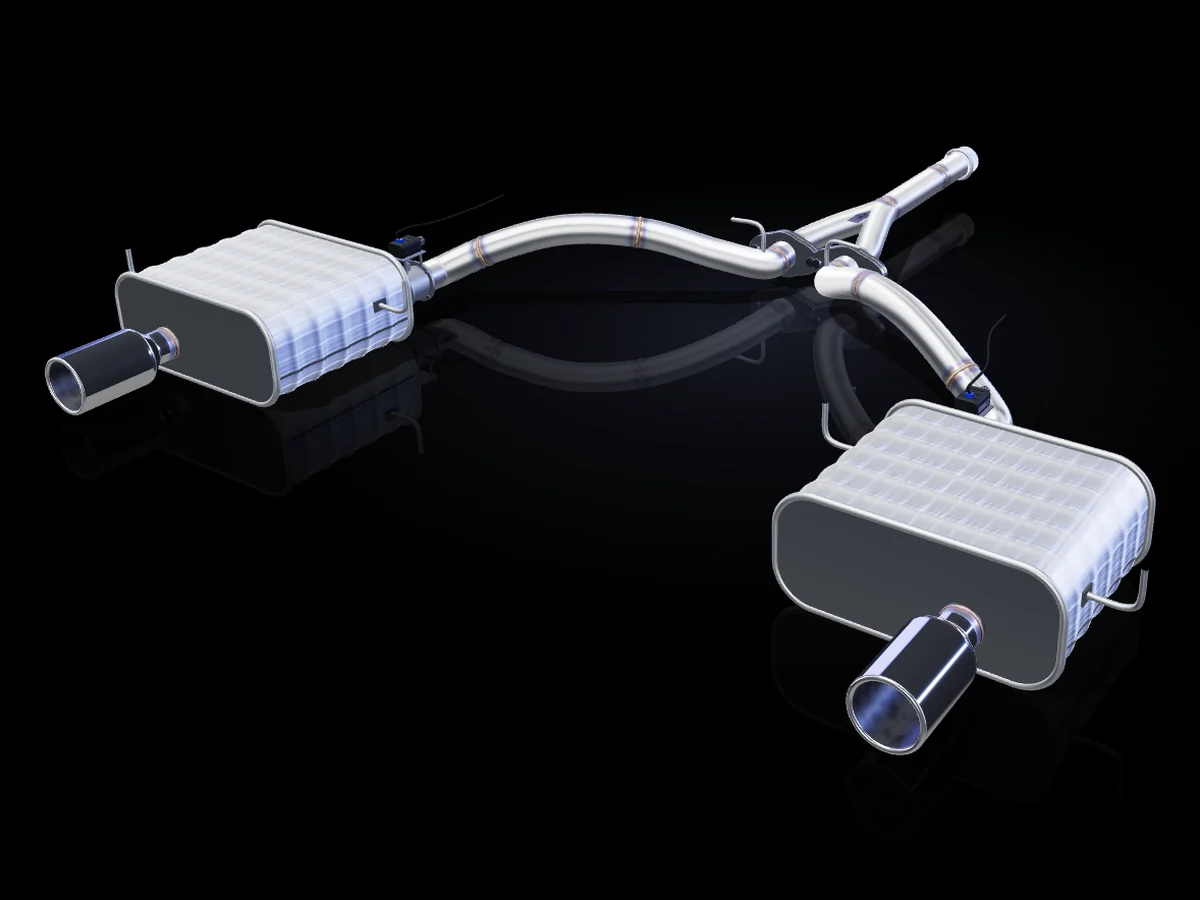
Exhaust drone explained — and how a good system avoids it
A great exhaust should sound exciting when you accelerate and disappear when you cruise. Drone is what happens when it does not — a low, constant boom that turns a long drive into hard work.

In short
- Drone is a low-frequency resonance at constant engine speed.
- It is tuned out with chamber design and resonators, not just more packing.
- Valves add a second line of defence: closed for cruising, open for fun.
What drone is
An engine produces exhaust pulses at a rate set by its speed and number of cylinders. At a steady cruise — typically somewhere in the low-to-mid rev range — those pulses settle on one frequency. If that frequency lands on a resonance of the exhaust or the car's body, it gets amplified into a low boom you feel as much as hear, usually somewhere around 80 to 150 Hz.
Why straight-through systems drone
The cheapest way to make an exhaust louder is to make it emptier: straight pipes, small mufflers, little volume. That removes the parts that would have calmed those cruising frequencies, so the system sounds great for ten minutes and tiring for two hours.
How it is tuned out
- Chamber volume — larger, well-proportioned muffler chambers absorb low-frequency energy that small boxes cannot.
- Resonators — side-branch chambers or tubes sized to cancel one specific frequency, like the drone band, while leaving the rest of the sound alone.
- Pipe routing and lengths — changing where the pulses meet and reflect moves resonances out of the cruising range.
- Valves — closed at cruise, the gas takes the long path through the chambers and the cabin stays calm.
Loud is easy. A clean tone that stays comfortable at constant speed is the hard part.
Why it happens at one particular speed
A four-stroke engine fires each cylinder once every two revolutions. The main exhaust frequency is therefore engine speed in revolutions per second multiplied by half the number of cylinders. At 2,000 rpm a four-cylinder produces about 67 Hz, a six-cylinder 100 Hz, a V8 about 133 Hz and a V10 about 167 Hz. Whichever of these lines up with a resonance at your usual cruising speed is the one you will hear as drone.
| Engine | 1,500 rpm | 2,000 rpm | 2,500 rpm |
|---|---|---|---|
| 4 cylinders | 50 Hz | 67 Hz | 83 Hz |
| 6 cylinders | 75 Hz | 100 Hz | 125 Hz |
| 8 cylinders | 100 Hz | 133 Hz | 167 Hz |
| 10 cylinders | 125 Hz | 167 Hz | 208 Hz |
That is also why a system has to be tuned for a specific engine: a resonator sized for a V8 at motorway speed does little for a four-cylinder turbo.
The car plays a part too
The cabin is a resonating box of its own. Coupés and hatchbacks with a large open rear tend to carry low frequencies into the cabin more than saloons with a separate boot, and lightweight cars with less insulation more than heavy ones. The same exhaust can be perfectly calm in one body and noticeable in another — another reason vehicle-specific tuning matters.
What to listen for
When you hear a system, do not judge it only on a cold start or full throttle. Ask how it sounds at a steady motorway cruise with the windows up. That is where a well-tuned exhaust shows what it is worth.
Questions about this topic
01Can drone be fixed after installation?
Sometimes, with an added resonator or by keeping the valves closed at cruise. It is far easier to choose a system that was tuned against drone from the start.
02Does more packing stop drone?
Packing mostly absorbs higher frequencies. Drone sits low, so it is controlled mainly by chamber volume and resonators.
Keep reading
More guides
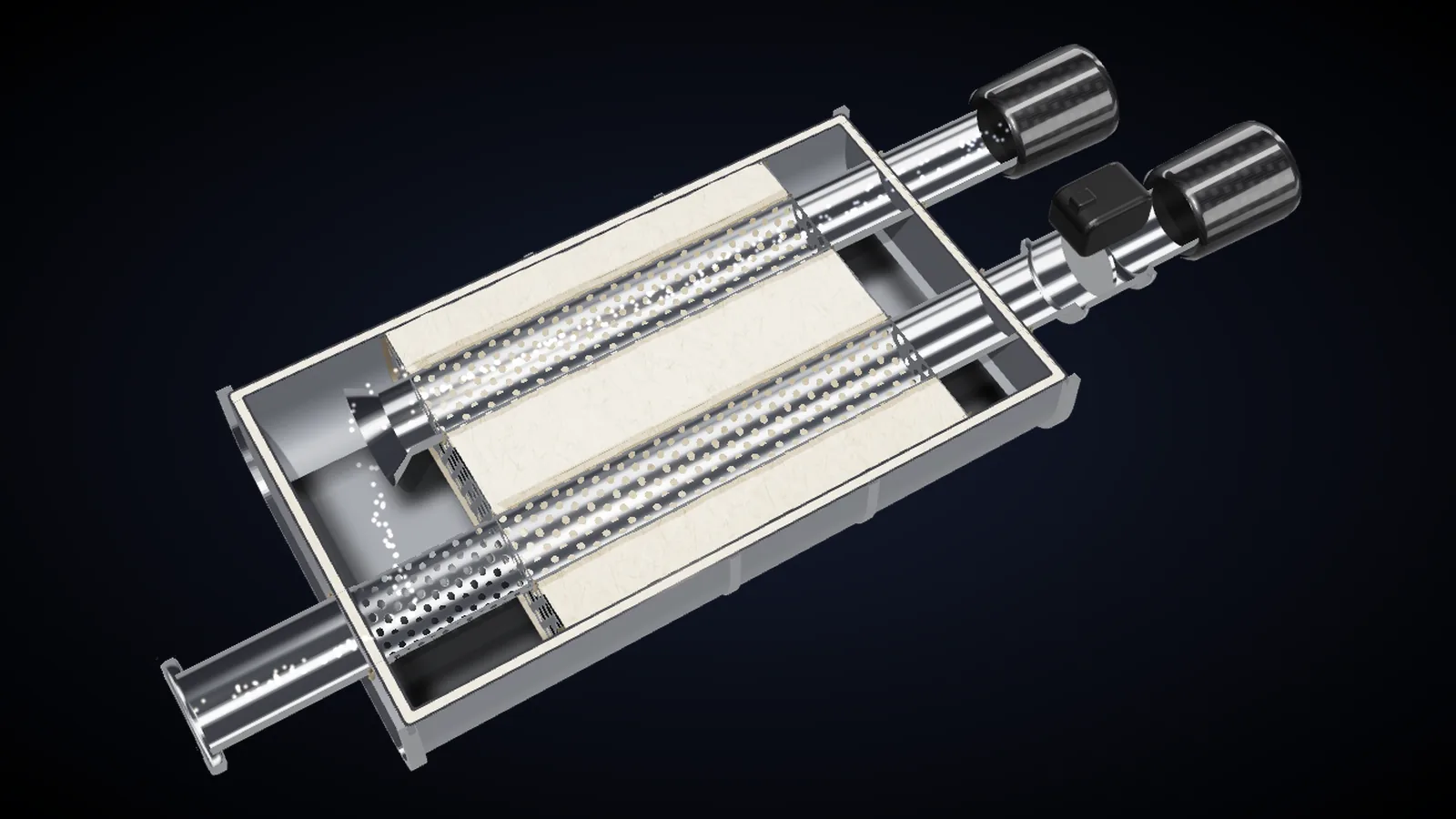 How a valvetronic exhaust works
What the valves in a valvetronic exhaust do, how they are switched and why one system can be quiet in the morning and loud on the weekend.
Read
How a valvetronic exhaust works
What the valves in a valvetronic exhaust do, how they are switched and why one system can be quiet in the morning and loud on the weekend.
Read
 Titanium vs stainless steel: which exhaust is right for you?
Titanium or stainless steel? How the two exhaust materials differ in weight, sound, heat colour, durability and price — and how to choose.
Read
Titanium vs stainless steel: which exhaust is right for you?
Titanium or stainless steel? How the two exhaust materials differ in weight, sound, heat colour, durability and price — and how to choose.
Read
 Cat-back, rear section, downpipe: exhaust parts explained
From downpipe to tailpipe: what each part of an exhaust does and what cat-back, rear-section and full systems include — so you know what to ask for.
Read
Cat-back, rear section, downpipe: exhaust parts explained
From downpipe to tailpipe: what each part of an exhaust does and what cat-back, rear-section and full systems include — so you know what to ask for.
Read
Which system fits your car?
Tell us the make, model and year — we will check fitment and send you the options.