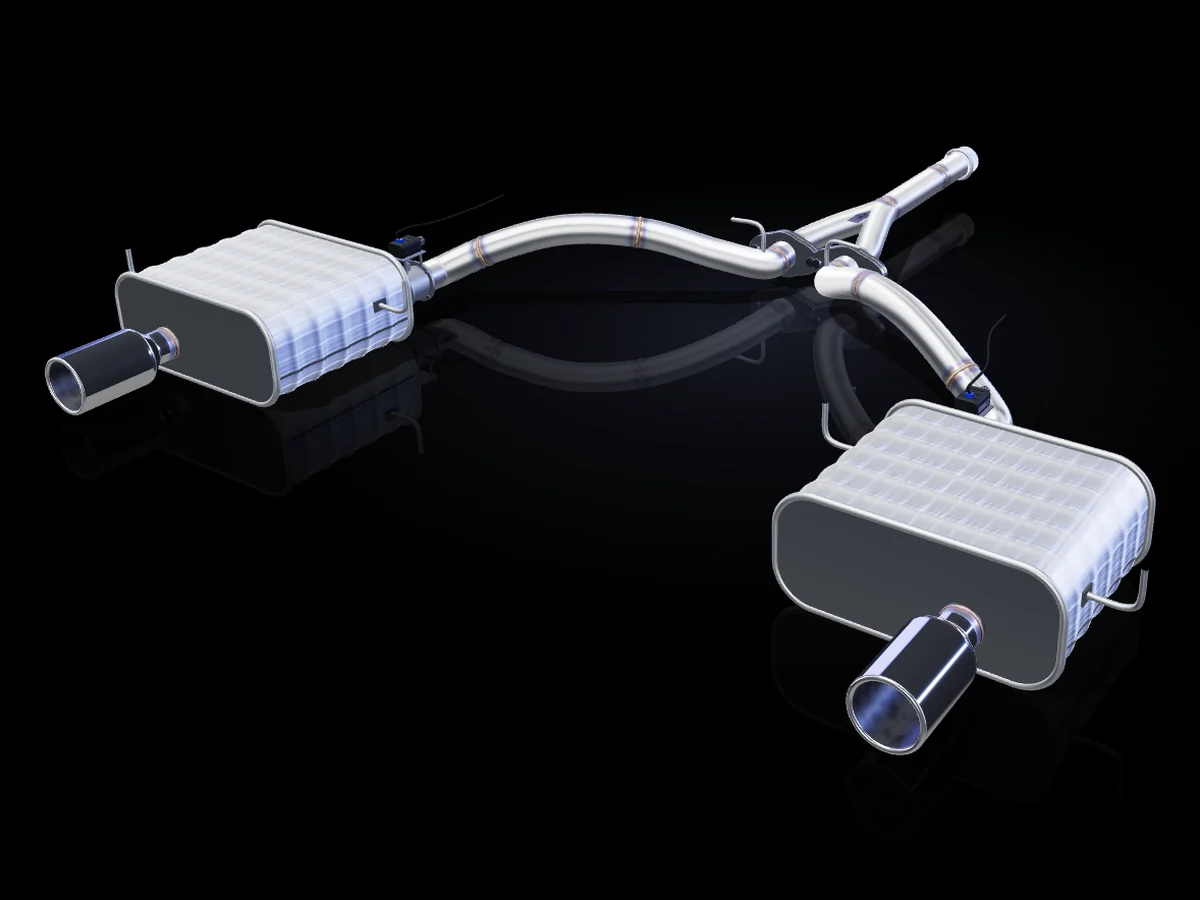
How a valvetronic exhaust works
A valvetronic exhaust is really two exhausts in one: a quiet path through the muffler and a direct path for the full sound. A valve decides which one the gas takes — and you decide when the valve moves.
In short
- Valves open or close a direct path through the muffler.
- Closed means quiet and comfortable; open means the full voice of the engine.
- Control can come from a remote, an app or the car's own drive modes.
Two paths, one exhaust
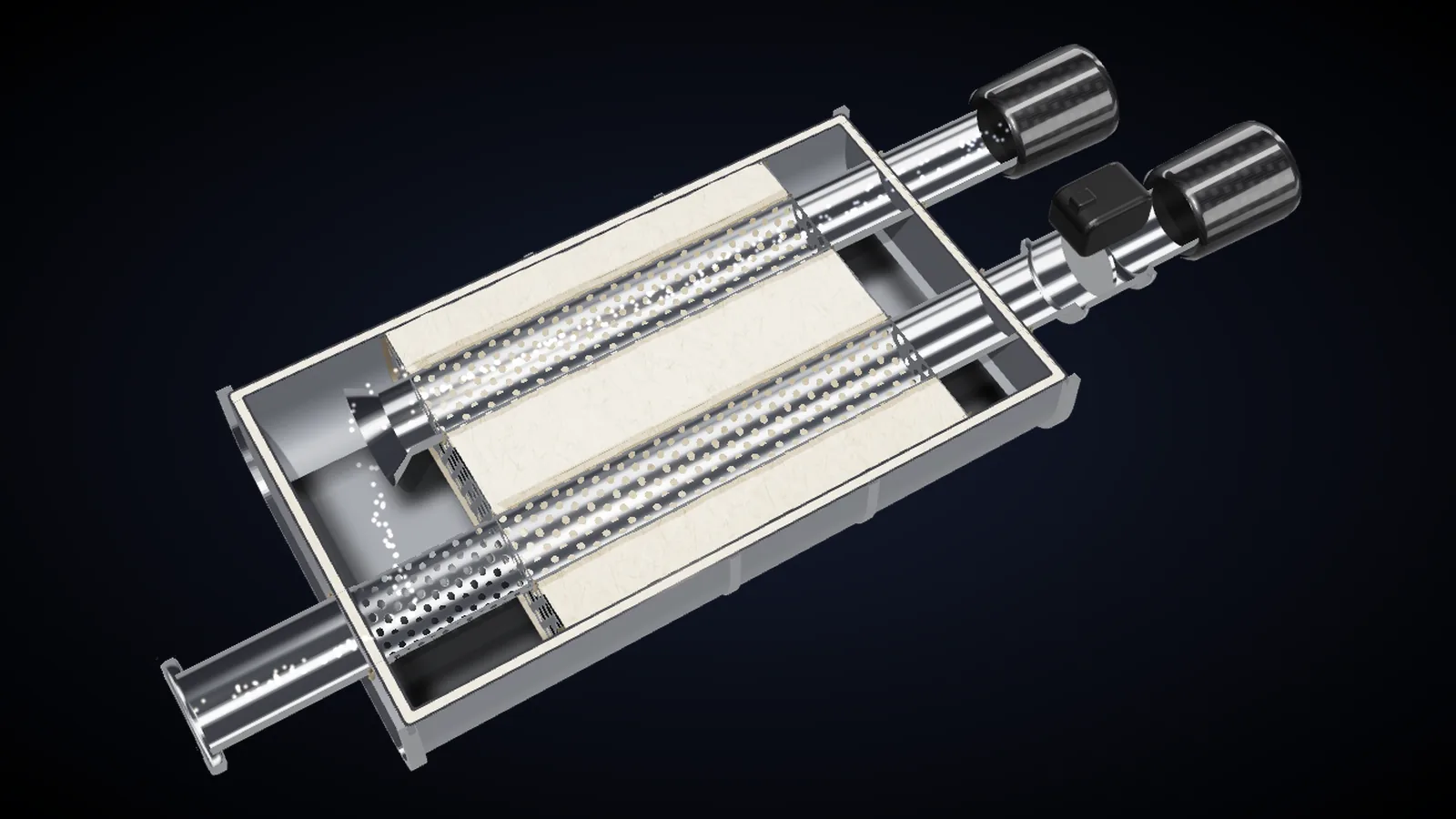
Inside every muffler the exhaust gas has to lose energy before it leaves the tailpipe. A conventional silencer does this one way only: the gas is routed through perforated tubes, chambers and absorbent packing that take the sharp edges off the sound. That works, but it is a permanent compromise — the system is always as quiet, or as loud, as it was built.
A valvetronic system adds a second, more direct route. With the valve closed, the gas takes the long way through the chambers and the car sounds civil. With the valve open, most of the flow takes the short way and the engine's character comes through almost unfiltered.
What the valve actually is
The valve itself is a round flap on a shaft, sitting inside the pipe like a throttle plate. Turned across the bore it blocks the direct route; turned edge-on it gets out of the way. Because it lives in hot exhaust gas, the flap, shaft and bushings are made to cope with heat, soot and vibration for years.
Something has to turn that shaft. Two types of actuator are common:
- Vacuum actuators — a canister with a diaphragm pulls a rod when vacuum is applied through a small electric valve. Simple, robust and widely used on factory systems.
- Electric actuators — a small motor drives the flap directly. No vacuum lines, and the valve can be held in positions between open and closed.
Who decides when it opens
How the valves are controlled depends on the car and the system. On many modern performance cars the factory already controls exhaust valves through its drive modes — in those cases an aftermarket system can usually use the original signal, so Comfort stays quiet and Sport opens up exactly as before. Where that is not available, a separate controller takes over.
- Drive modes — the valves follow the car's own settings.
- Remote or app — open and close at the press of a button.
- Automatic — opening with engine speed or load, closing again when you cruise.
What changes in the sound
Opening the valve does more than add volume. With the long path gone, more of the lower notes and the sharp edges of each exhaust pulse reach the tailpipe, so the tone becomes deeper and more direct. Closed, the chambers smooth those pulses into a rounder, quieter note. That is why a good valvetronic system sounds like two different cars rather than one car with a volume knob.
Many owners keep the valves closed for a cold start and while the engine warms up, open them on a country road or under hard acceleration, and close them again for long motorway stretches. It quickly becomes as natural as choosing a drive mode.
Is it reliable?
Valves live in a harsh place: hot gas, soot, water spray and road salt. Well-made valves use heat-resistant shafts and bushings and keep the actuator itself away from the hottest areas. Vacuum systems depend on tight hoses and connections; electric actuators on clean wiring. A quick look at hoses, plugs and mounting brackets during routine servicing is all most systems need.
Valvetronic or fixed?
| Valvetronic | Fixed system | |
|---|---|---|
| Sound range | Quiet to full, switchable | One character, always |
| Long trips | Calm with valves closed | Depends on the tuning |
| Complexity | Valves and control | Simplest |
| Best for | Daily drivers who want both | Weekend and track cars |
Why it is worth it
The point of a valvetronic exhaust is not maximum volume — it is choice. The same car can leave the driveway quietly at six in the morning, cruise a motorway without drone, and still sound the way it should on an open road. That is why most owners who drive their car every day end up choosing the switchable version.
One exhaust, every mood — quiet when you need it, uncompromising when you want it.
Questions about this topic
01Can I drive with the valves open all the time?
Technically yes, but the closed position is what keeps long drives comfortable and the car considerate in residential areas. Most owners switch as the situation demands.
02Does a valvetronic system work on cars without factory valves?
Yes. Where the car has no factory valve control, the system is operated by its own controller, for example by remote or app.
Keep reading
More guides
 Titanium vs stainless steel: which exhaust is right for you?
Titanium or stainless steel? How the two exhaust materials differ in weight, sound, heat colour, durability and price — and how to choose.
Read
Titanium vs stainless steel: which exhaust is right for you?
Titanium or stainless steel? How the two exhaust materials differ in weight, sound, heat colour, durability and price — and how to choose.
Read
 Exhaust drone explained — and how a good system avoids it
Why some exhausts boom inside the car at motorway speed, which frequencies cause it, and how chambers, resonators and valves keep a system drone-free.
Read
Exhaust drone explained — and how a good system avoids it
Why some exhausts boom inside the car at motorway speed, which frequencies cause it, and how chambers, resonators and valves keep a system drone-free.
Read
 Cat-back, rear section, downpipe: exhaust parts explained
From downpipe to tailpipe: what each part of an exhaust does and what cat-back, rear-section and full systems include — so you know what to ask for.
Read
Cat-back, rear section, downpipe: exhaust parts explained
From downpipe to tailpipe: what each part of an exhaust does and what cat-back, rear-section and full systems include — so you know what to ask for.
Read
Which system fits your car?
Tell us the make, model and year — we will check fitment and send you the options.