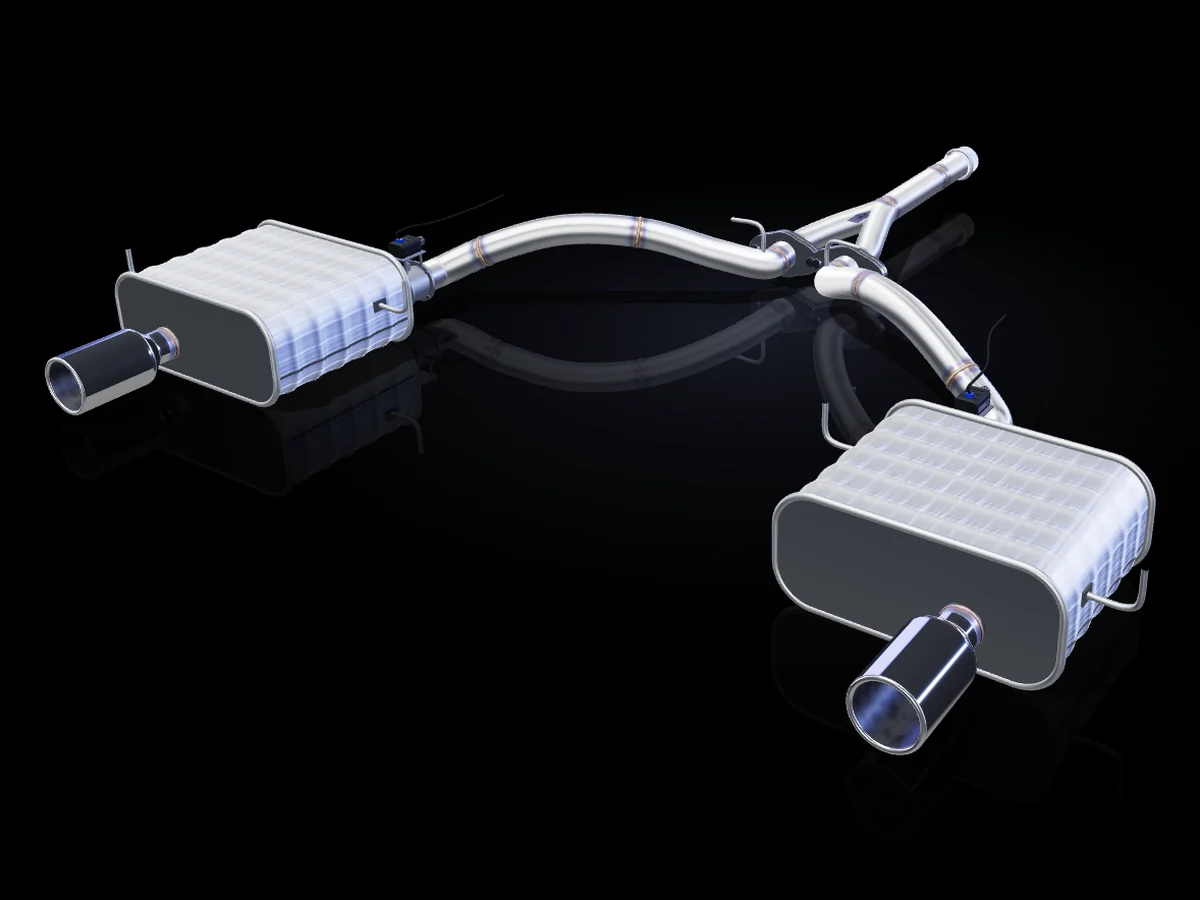
Titanium vs stainless steel: which exhaust is right for you?
Both materials make excellent exhausts. The difference is in what you notice: how much the system weighs, how it sounds, and how it looks after the first hard drive.

In short
- Titanium is the lighter material and colours blue, violet and gold with heat.
- Stainless steel is robust, easier to work with and sounds deeper and rounder.
- Choose titanium for weight and look, stainless for value and everyday toughness.
Weight
Titanium is a much less dense metal than steel — roughly 4.5 grams per cubic centimetre against about 8 for stainless steel. Combined with thinner walls, a titanium system typically weighs far less than the same design in stainless; around 40% lighter is a fair rule of thumb. On the car that weight comes off the very back, behind the rear axle, where it matters most for how the car feels.
Sound
Material changes tone. Thin titanium walls resonate more freely and give a crisper, more metallic edge — the sound many associate with motorsport. Stainless steel, with its heavier walls, damps those high frequencies a little and tends to sound deeper and rounder. Neither is better; they are different voices for the same engine.
Look and heat colour
Heat oxidises the surface of both metals, but the result looks very different. Titanium runs through straw, gold, violet and deep blue — a pattern that is unique to every system and to how it is driven. Stainless steel takes on a light straw-gold tint near the engine while the tailpipes stay close to their polished finish.
Durability and care
Both materials resist corrosion very well and are built to last the life of the car. Titanium is exceptionally corrosion-resistant but demands careful, clean welding during manufacture. Stainless steel is tough and forgiving, and is easier to repair if a pipe is ever damaged. Either way, clean the tailpipes when they are cool with a non-abrasive metal cleaner.
Side by side
| Titanium | Stainless steel | |
|---|---|---|
| Weight | Lightest — around 40% less | Heavier |
| Sound | Crisp, metallic | Deep, round |
| Heat colour | Blue, violet, gold | Light straw gold |
| Price | Higher | Lower |
| Best for | Weight, look, motorsport feel | Value, everyday use |
Why titanium is harder to make
Titanium reacts with oxygen when it is hot. To make strong welds, the joint has to be shielded with inert gas on the outside and, ideally, on the inside of the pipe as well. Without that protection the weld turns brittle. It takes more time, more gas and more skill — one reason titanium systems cost more than stainless ones built to the same design.
Stainless steel is more forgiving to form and weld, which keeps manufacturing costs down and makes later repairs or modifications easier for a workshop.
Living with each material
- Heat colour on titanium — it is a thin oxide layer, part of the metal itself. It cannot be polished away like dirt, and it is not meant to be.
- Tint on stainless — the light gold near the engine is normal; polished tailpipes can be kept bright with regular cleaning.
- Stone chips and scratches — both materials resist corrosion, so marks are cosmetic rather than a problem.
- Weight you feel — the saving with titanium is at the very rear of the car, which many drivers notice in how the car turns in.
Titanium is the statement. Stainless steel is the sensible choice that still sounds fantastic.
How to choose
If the lowest weight and the unmistakable heat colours matter to you, titanium is worth it. If you want a durable, great-sounding system at a lower price — or you prefer a classic polished look — stainless steel is the smart choice. Tell us your car and how you use it, and we will recommend the version that fits.
Questions about this topic
01Is titanium louder than stainless steel?
Not necessarily louder, but sharper. Volume depends mostly on the system design and valves; the material mainly changes the tone.
02Can stainless steel be made to look like titanium?
Tailpipes can be finished with a burnt-blue look, but the natural heat colours along the whole system are a property of titanium.
Keep reading
More guides
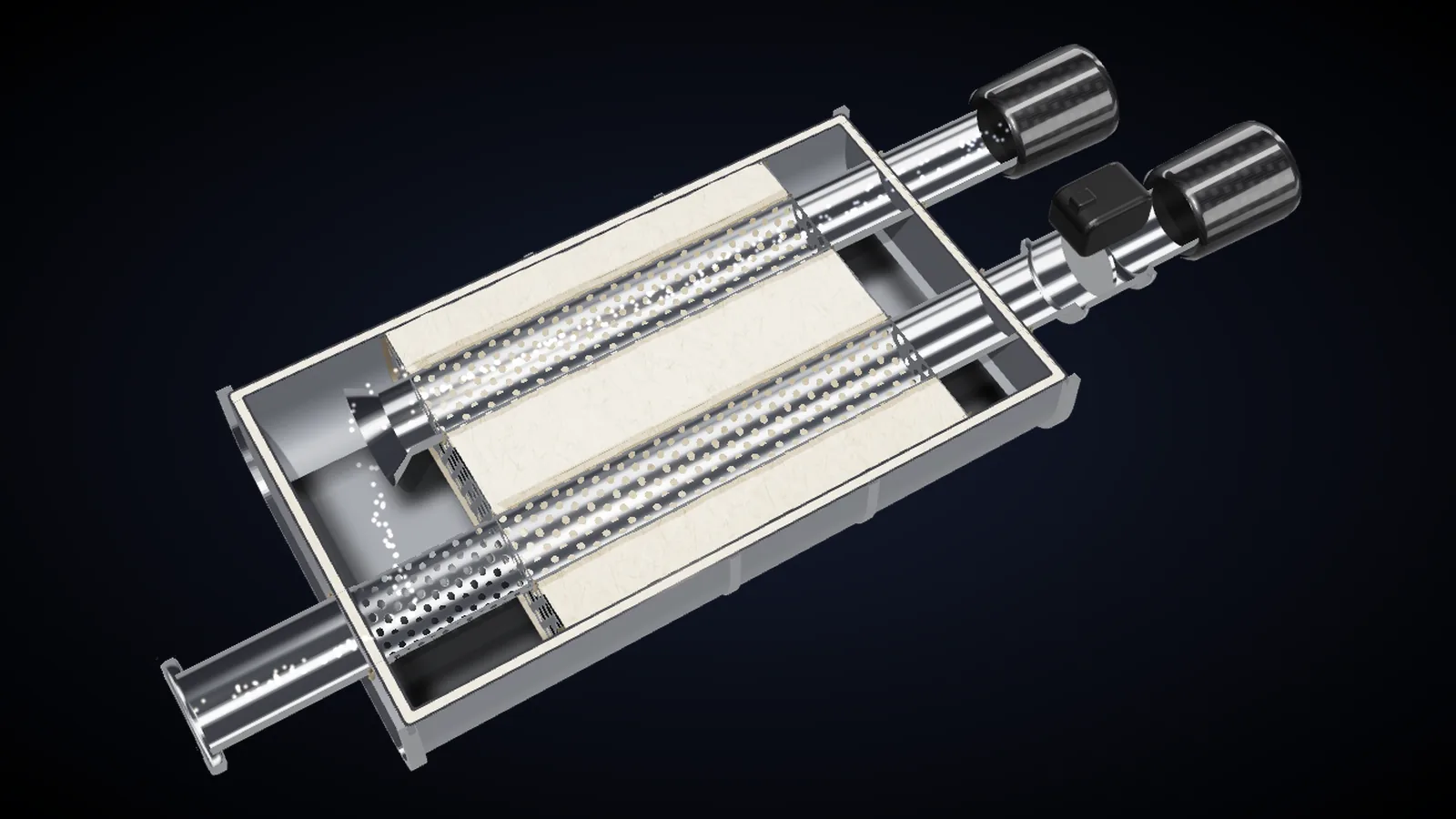 How a valvetronic exhaust works
What the valves in a valvetronic exhaust do, how they are switched and why one system can be quiet in the morning and loud on the weekend.
Read
How a valvetronic exhaust works
What the valves in a valvetronic exhaust do, how they are switched and why one system can be quiet in the morning and loud on the weekend.
Read
 Exhaust drone explained — and how a good system avoids it
Why some exhausts boom inside the car at motorway speed, which frequencies cause it, and how chambers, resonators and valves keep a system drone-free.
Read
Exhaust drone explained — and how a good system avoids it
Why some exhausts boom inside the car at motorway speed, which frequencies cause it, and how chambers, resonators and valves keep a system drone-free.
Read
 Cat-back, rear section, downpipe: exhaust parts explained
From downpipe to tailpipe: what each part of an exhaust does and what cat-back, rear-section and full systems include — so you know what to ask for.
Read
Cat-back, rear section, downpipe: exhaust parts explained
From downpipe to tailpipe: what each part of an exhaust does and what cat-back, rear-section and full systems include — so you know what to ask for.
Read
Which system fits your car?
Tell us the make, model and year — we will check fitment and send you the options.