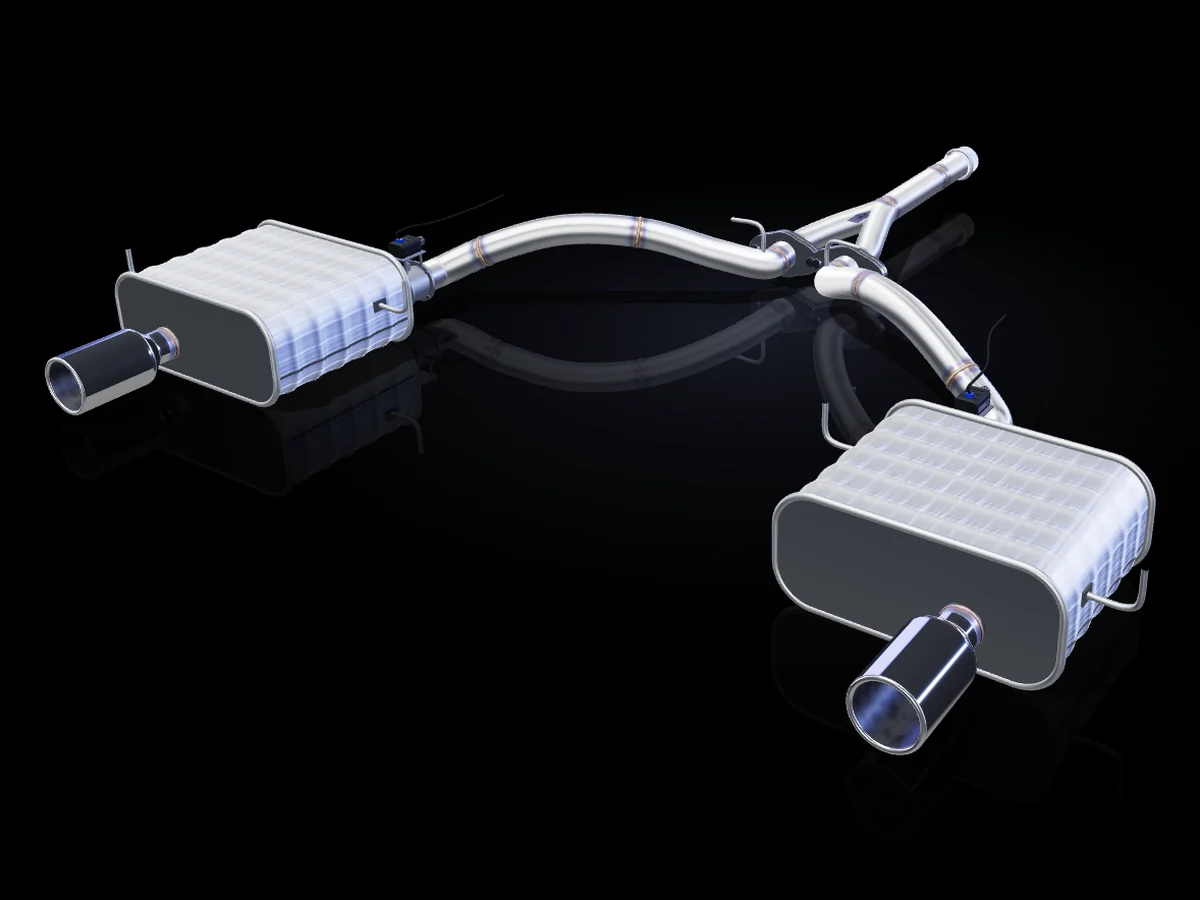
Cat-back, rear section, downpipe: exhaust parts explained
An exhaust is a chain of parts, each with its own job. Knowing where one ends and the next begins makes it much easier to understand what you are buying.

In short
- A cat-back replaces everything behind the catalytic converters.
- A rear section is just the muffler and tailpipes — the simplest upgrade.
- Changes in front of the catalytic converters affect emissions and need extra care.
From engine to tailpipe
- Manifold or headers — collect the gas from each cylinder.
- Downpipe — on turbocharged cars, the pipe from the turbo outlet towards the catalytic converter.
- Catalytic converters — clean the exhaust gas; essential for emissions.
- Mid-pipes — connect the front of the system to the back, often with an X- or H-pipe that links both banks.
- Resonators — fine-tune the sound and cancel unwanted frequencies.
- Rear mufflers — shape the final sound; this is where the valves usually sit.
- Tailpipes — the part everyone sees.
What the system names mean
| System | Includes | Good to know |
|---|---|---|
| Tailpipes | Tips only | Changes the look, barely the sound |
| Rear section | Rear mufflers + tailpipes | Simplest way to change the character |
| Cat-back | Everything behind the cats | The most common road-car upgrade |
| Downpipe | Turbo to catalytic converter | Affects emissions — needs care |
X-pipe or H-pipe?
On engines with two cylinder banks — V6, V8, V10 — the two sides of the exhaust are often linked. An H-pipe joins them with a short crossover and tends to give a deeper, classic tone. An X-pipe lets the two streams merge and separate again, which smooths the pulses and usually sounds higher, smoother and raspier at the top end. Which one suits a car is part of the sound design.
Two kinds of muffler
- Chambered (reflective) — internal walls bounce sound waves back on each other. Quieter and deeper, with more flow resistance.
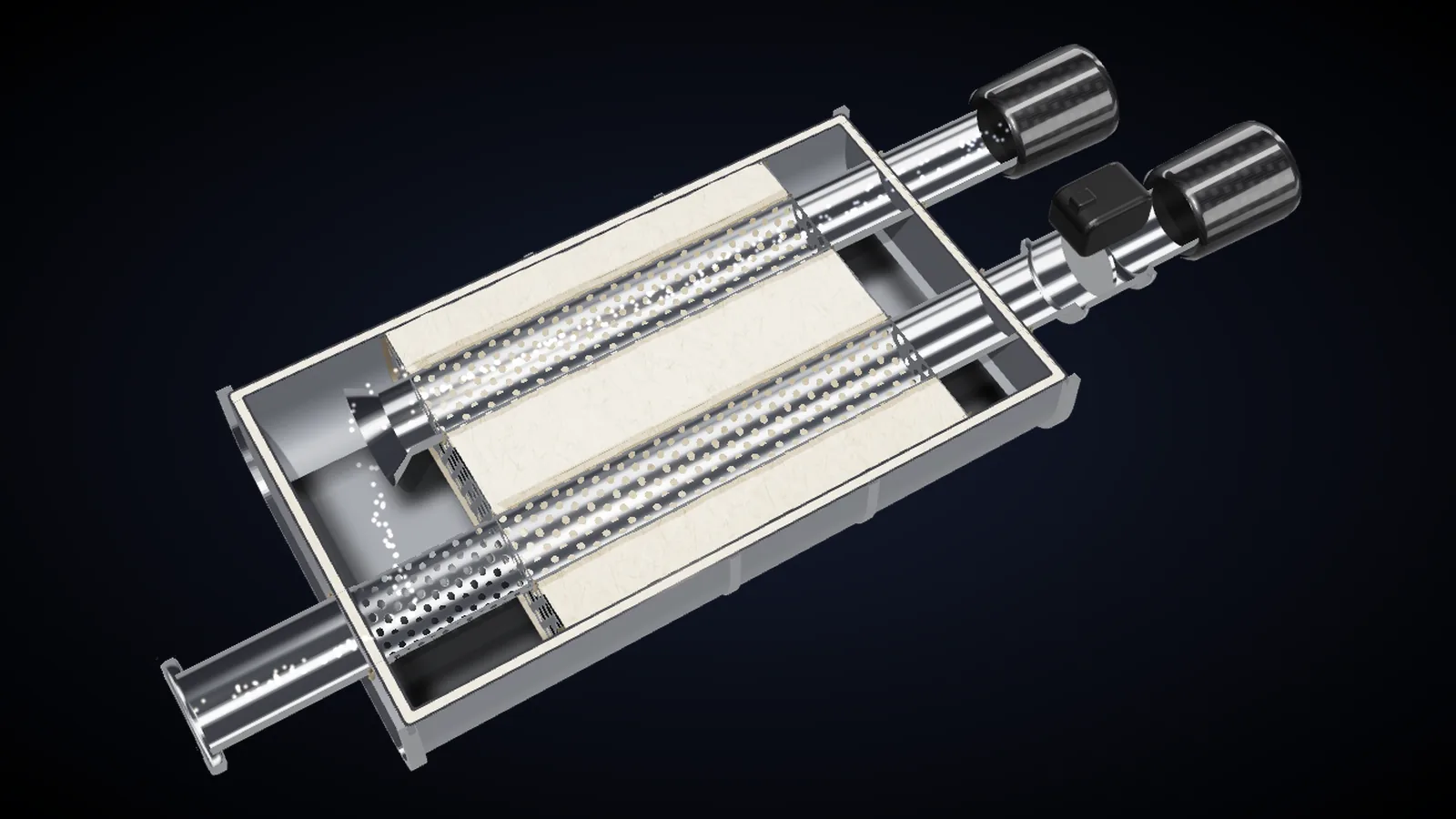
- Straight-through (absorptive) — a perforated pipe wrapped in packing. Freer flow and more volume, with the packing taking off the harsh edge.
- Valvetronic — combines both: chambers when the valve is closed, a direct path when it is open.
How the parts are joined
Joints matter for fit and for leaks. V-band clamps — two machined flanges pulled together by a single clamp — seal well and come apart quickly. Slip joints with band clamps allow fine adjustment during installation, and bolted flanges with gaskets are common where systems meet factory parts. A good system uses each where it makes sense.
Which parts change the sound most
The rear mufflers and valves have the biggest effect on what you hear, resonators decide whether the car drones at cruise, and the front sections mostly shape flow and the raspy edge under load. Tailpipes change the look far more than the sound. That order is a useful guide when you decide how far to go.
Why cat-back is the sweet spot
A cat-back system changes everything that shapes the sound — pipes, resonators, mufflers, valves and tailpipes — while leaving the catalytic converters and the emissions hardware exactly as the factory intended. That combination of a real difference in sound and a clean installation is why it is the most popular choice for road cars.
Questions about this topic
01Does a cat-back system change emissions?
No. It sits behind the catalytic converters and leaves the emissions hardware untouched.
02Can I start with a rear section and upgrade later?
Often yes — ask us which parts of a system are compatible for your car.
Keep reading
More guides
 How a valvetronic exhaust works
What the valves in a valvetronic exhaust do, how they are switched and why one system can be quiet in the morning and loud on the weekend.
Read
How a valvetronic exhaust works
What the valves in a valvetronic exhaust do, how they are switched and why one system can be quiet in the morning and loud on the weekend.
Read
 Titanium vs stainless steel: which exhaust is right for you?
Titanium or stainless steel? How the two exhaust materials differ in weight, sound, heat colour, durability and price — and how to choose.
Read
Titanium vs stainless steel: which exhaust is right for you?
Titanium or stainless steel? How the two exhaust materials differ in weight, sound, heat colour, durability and price — and how to choose.
Read
 Exhaust drone explained — and how a good system avoids it
Why some exhausts boom inside the car at motorway speed, which frequencies cause it, and how chambers, resonators and valves keep a system drone-free.
Read
Exhaust drone explained — and how a good system avoids it
Why some exhausts boom inside the car at motorway speed, which frequencies cause it, and how chambers, resonators and valves keep a system drone-free.
Read
Which system fits your car?
Tell us the make, model and year — we will check fitment and send you the options.